
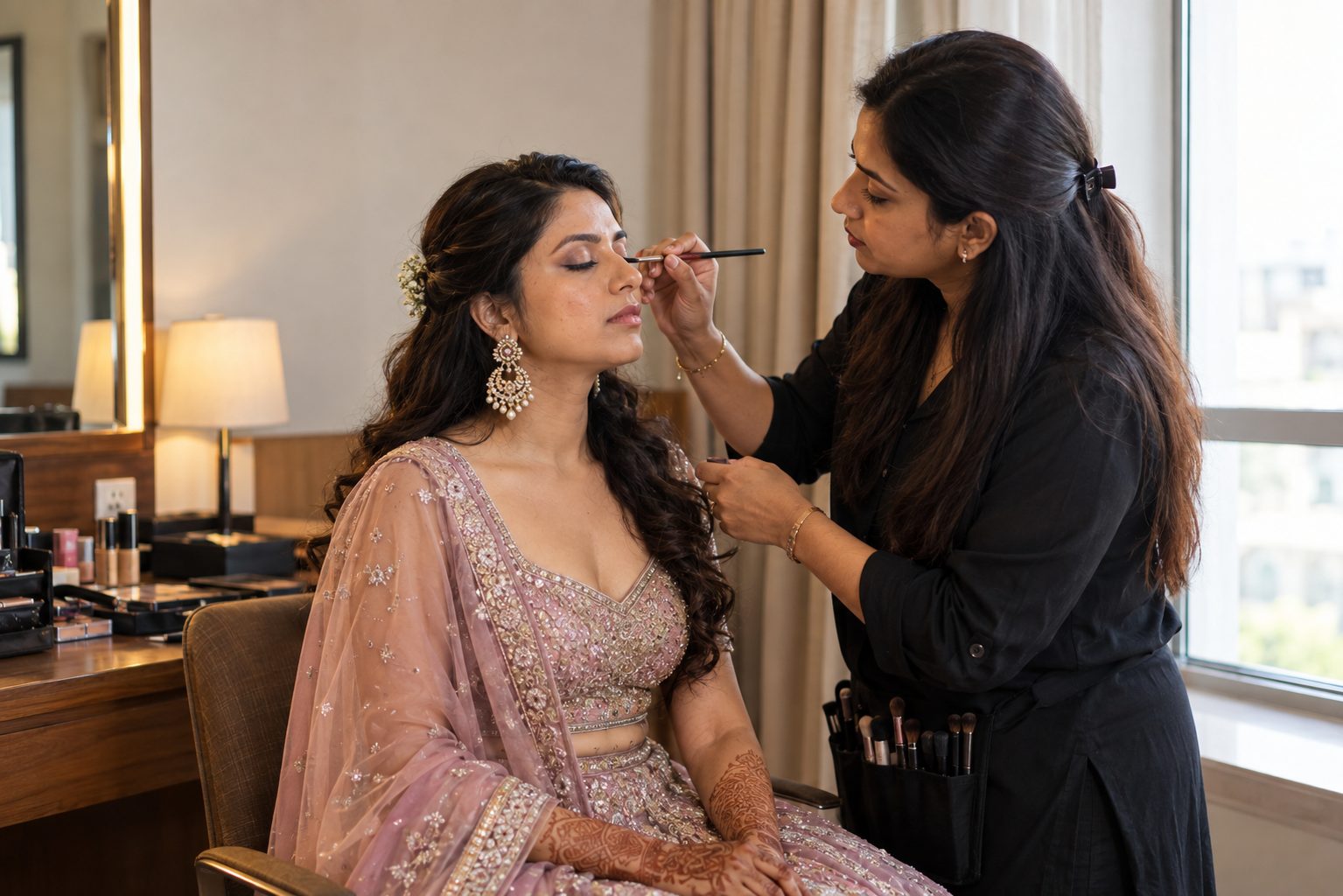
Why the right bridal makeup artist matters
What makes bridal makeup different from everyday makeup?
- Longevity: formulas and application must last for many hours and multiple touchpoints (ceremony, photos, hugs).
- Photography-readiness: colors, finish, and contouring should render well in both daylight and flash photography.
- Customization: looks are matched to outfits, hair, cultural styles, and personal comfort with cosmetics.
- Comfort and skin health: products and hygiene practices should suit your skin type and sensitivities.
Step-by-step: How to find and evaluate candidates
- 1. Start early
Start early and cast a wide net. Begin your search as soon as you have a date—top artists often book months ahead. Create a short list of 3–6 candidates who work in your area or are available to travel.
- 2. Look beyond isolated photos
Study portfolios for consistency, not just single images. Look for repeated outcomes across different faces and lighting conditions. Note whether they show before/after images and multiple skin tones.
- 3. Check experience with weddings
Prioritize bridal experience. Ask whether the artist regularly does full-day wedding services, large party schedules, or only occasional bridal looks. Bridal experience often means familiarity with timing, touch-ups, and photography needs.
- 4. Communicate your vision
Talk about your vision and listen for partnership. Share mood images, your dress/dupatta colors, and how you want to feel. A good artist will explain trade-offs and propose a plan rather than dictate a single look.
- 5. Ask about products and hygiene
Confirm products and hygiene practices. Ask what brands and formats they use, how they sanitize tools between clients, and whether they can accommodate allergies or sensitive skin.
- 6. Schedule a trial session
Book a trial when possible. Use trials to test durability, color match, and comfort; bring your dress or a fabric swatch and plan for similar lighting to the wedding venue.
- 7. Compare and confirm
Compare logistics and communication before booking. Confirm timings, number of assistants, travel and setup needs, and how they handle touch-ups on the day. Compare price alongside style, reviews, and availability.
Pre-trial checklist: what to bring and note
- Mood images and notes describing what you like and dislike.
- A fabric swatch or a photo of your dress and jewelry to match undertones.
- A list of skin concerns, allergies, current skincare routine, and any recent treatments (chemical peels, lasers).
- A calendar of timings for the wedding day (getting-ready schedule, photos, ceremony start time).
- Contact details for hair, photographer, and planner—coordination matters for styling and lighting.
Key things to compare across artists
Portfolio
Look for consistency across multiple clients, varied skin tones, and both natural and formal styles.
Experience
Track-record with full-day schedules, trial-to-wedding consistency, and managing bridal parties.
Products & hygiene
Brands used, tool sanitation, single-use items (where appropriate), and allergy accommodations.
Trials
Whether a trial is included, cost of trials, what’s covered, and how many adjustments are allowed.
Logistics
Travel fees, setup time, number of assistants, and backup plans for delays.
Communication
Responsiveness, clarity on what’s included in the package, cancellation and rescheduling policies.
Pricing
Understand what the price covers (trial, travel, assistants, touch-ups) rather than focusing on lowest cost alone.
Day-of and timeline tips
- Start early: schedule the bride first and allocate buffer time for photos and unexpected delays.
- Bring a clean, quiet space with natural light where possible; provide chairs and a mirror for the artist.
- Confirm break and refreshment plans for you and the artist(s)—comfort affects the result.
- Plan touch-ups: ask if the artist will stay for touch-ups or provide a kit and instructions for your attendant.
Frequently asked questions
Do I always need a trial before the wedding?
A trial is strongly recommended when possible—especially if you’re changing looks, testing new products, or coordinating with hair and wardrobe. Trials let you confirm fit, color, and comfort before the day.
How many hours before the ceremony should makeup start?
Start times depend on complexity and the number of people being serviced. For a bridal solo session, begin at least 2–3 hours before key photos; for larger parties, coordinate a timeline with your artist and planner.
What if I have sensitive skin or allergies?
Share all skin concerns and allergy history in advance. Ask which products the artist uses and whether hypoallergenic or fragrance-free options are available. A patch test during the trial can reduce risk.